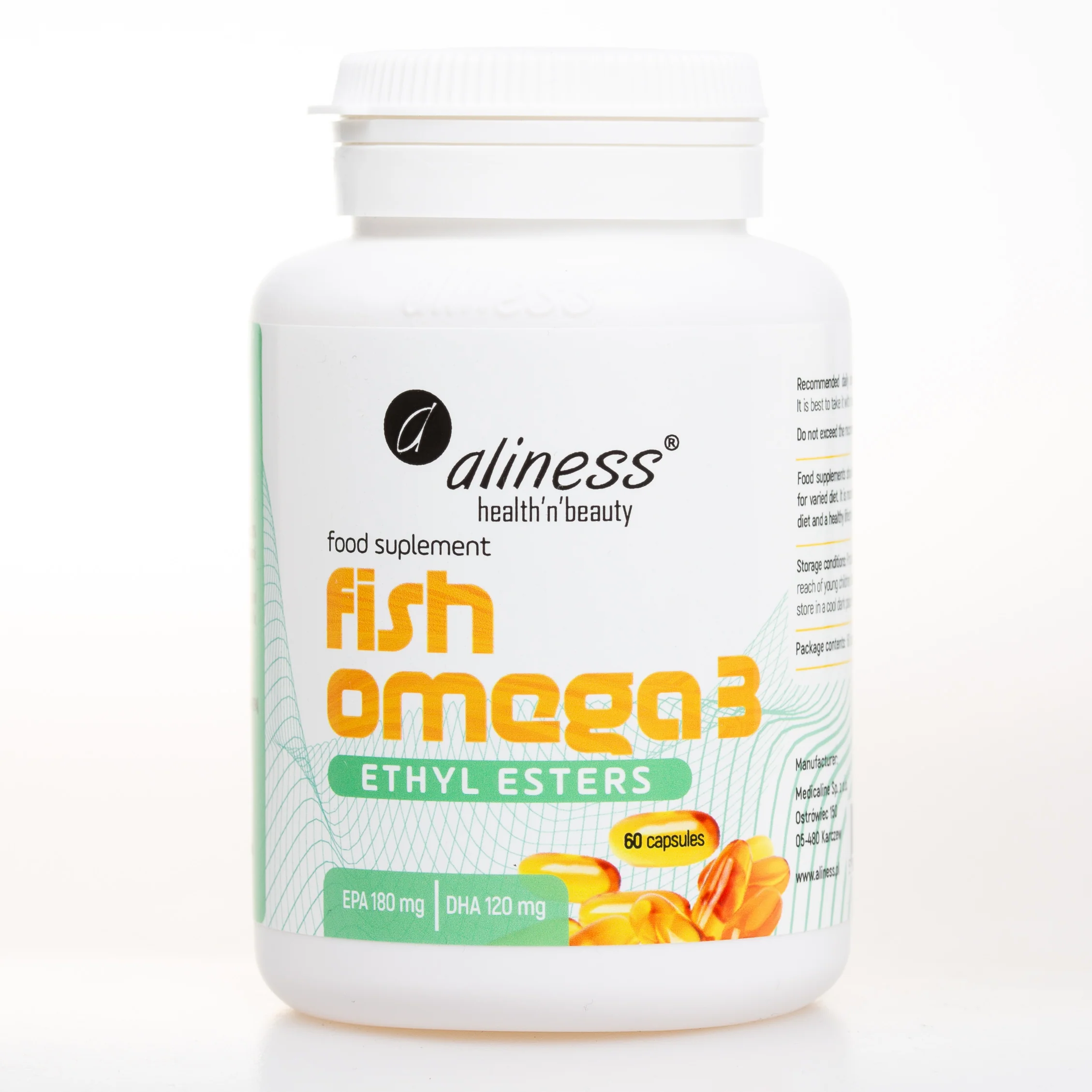
Fish Omega 3 Esters, 180mg EPA 120mg DHA, 60 capsules
Fish oil is rich in omega 3 fatty acids: eicosapentaenoic acid (EPA)
and quash docosahexaenoic (DHA).
- Food supplement
-
60 capsules
- EPA
- DHA
- Gluten Free
- Soy Free
- Lactose Free
- GMO Free
|
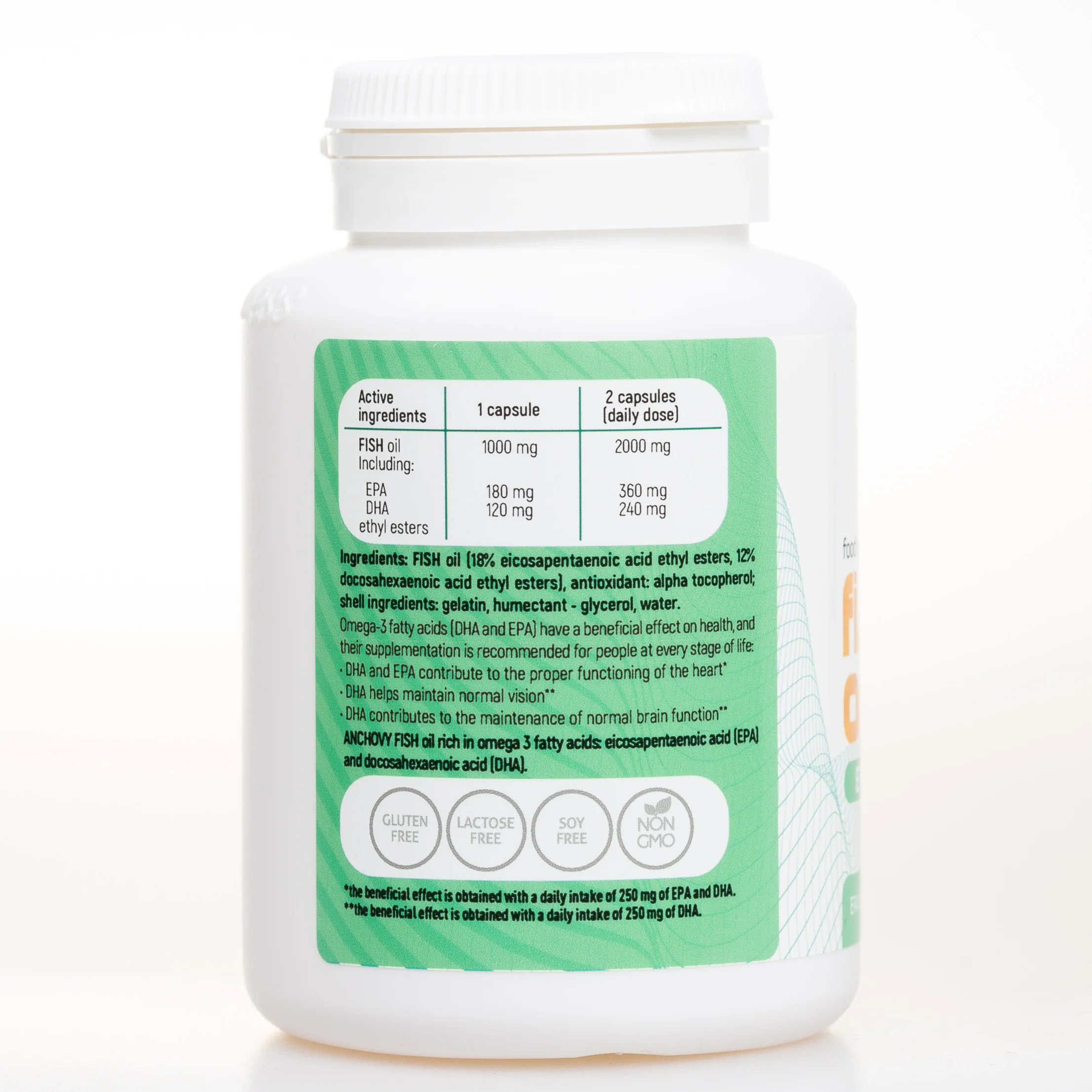
Ingredients |
1 capsule |
2 capsules (daily portion) |
|
Fish oil |
1000 mg |
2000 mg |
|
Including: |
|
|
|
EPA |
180 mg |
360 mg |
|
DHA ethyl esters |
120 mg |
240 mg |
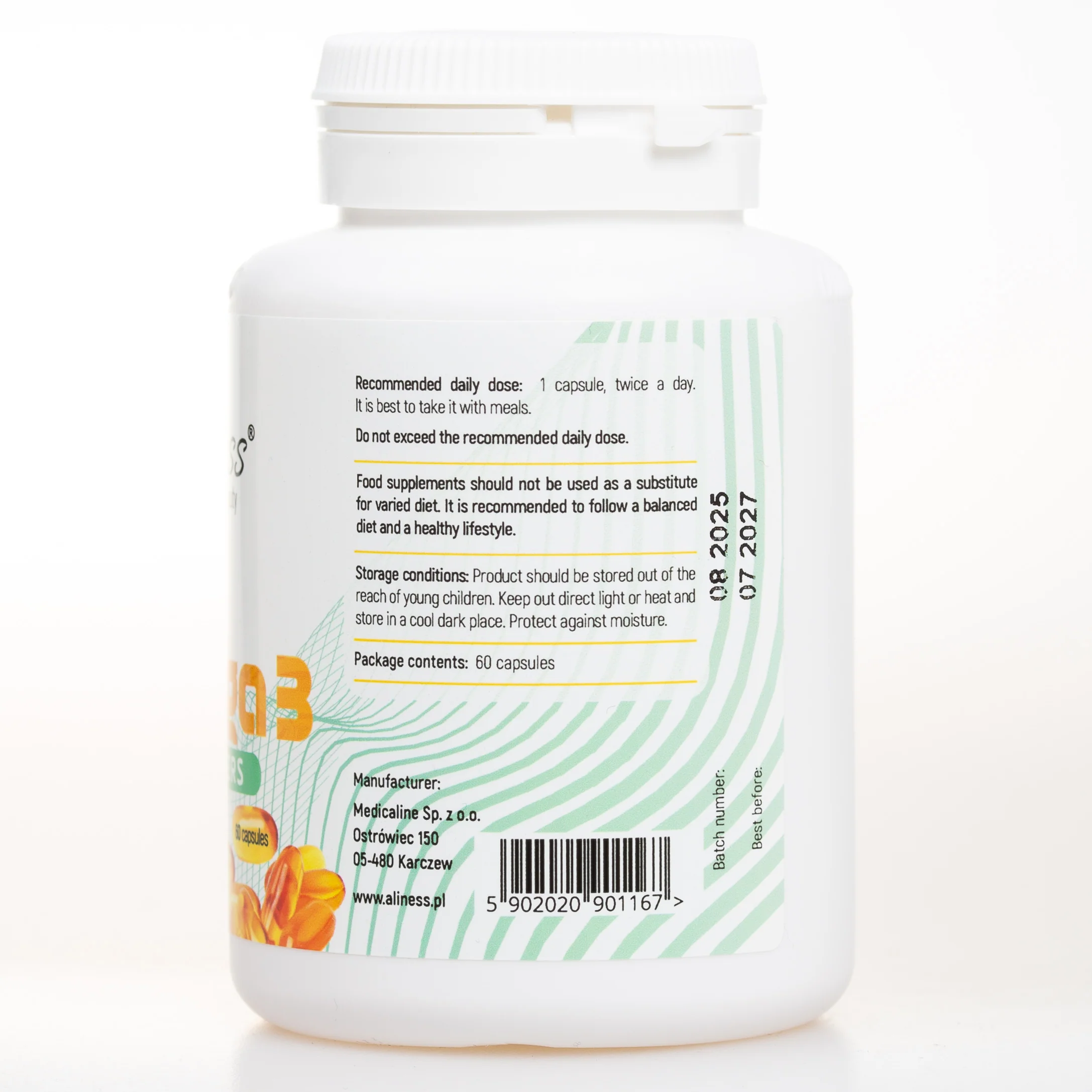
Ingredients: FISH oil (18% eicosapentaenoic acid ethyl esters, 12% docosahexaenoic acid ethyl esters), antioxidant: alpha tocopherol; shell ingredients: gelatine, humectant - glycerol, water.
Recommended daily dose necessary to obtain the beneficial effects of the product:
1 capsule, twice daily. Best taken with meals. Do not exceed the recommended daily dose.
This product should not be used as a substitute for a varied diet. A balanced diet and a healthy lifestyle are recommended.
Package contents: 60 capsules.
Storage conditions: Store at room temperature, out of reach of children. Protect from moisture.
Omega 3 acids triglycerides or esters?
The difference between triglycerides and omega esters results from their chemical structure and bioavailability, which affects the way the body absorbs and uses them.
Choosing the right form of omega-3 supplementation (TG or EE) depends on individual needs, price, and availability of the raw material. Triglycerides are a natural form, more easily absorbed and highly bioavailable, but more expensive and less commercially available. Ethyl esters are a processed form (more available and popular on the market), readily used due to their ability to obtain high concentrations of omega-3 fatty acids.
Aliness Fish Omega-3 Ethyl Esters is a source of omega-3 fatty acids, in an accessible soft gel form. The main ingredient is high-quality fish oil, which is characterized by a high concentration of omega-3 fatty acids.Omega-3: EPA (quash eicosapentaenoic) and DHA (quash docosahexaenoic) in the form of ethyl esters.
Each capsule Fish Omega-3 Ethyl Esters provides as much as 300 mg of essential omega-3 fatty acids, including 180 mg of EPA and 120 mg of DHA.
What are omega-3 fatty acids?
OMEGA-3 acids are a common name for a group of compounds belonging to the essential fatty acids (EFAs).
Omega-3 fatty acids are…
ESSENTIAL– because, unlike saturated fatty acids, the body cannot produce them on its own, and they are needed at many levels of its functioning. Therefore, they must be supplied in adequate amounts through food.
UNSATURATED– meaning that these acids contain at least one double bond between carbon atoms in the carbon chain. The suffix '3' indicates that the last such double bond is located at the third carbon atom from the end of the chain.
The three main OMEGA-3 acids that play the most important role in healthy eating are:

OMEGA-3 or OMEGA-6?
Providing both omega-3 and omega-6 fatty acids is crucial for the proper functioning of the body. However, because the metabolism of omega-3 (omega-3) and omega-6 (omega-6) fatty acids in the human body depends on the same enzymes, it is crucial to maintain a proper ratio of them in the diet. Excessive dietary intake of linoleic acid (a precursor of the omega-6 family) inhibits the synthesis of EPA and DHA (n-3 family) and exacerbates their secondary deficiency. The optimal omega-3 to omega-6 ratio is 1:4-5.
In the daily diet of an average European, the proportion differs significantly from the correct one and is 1:15-20, therefore in many cases supplementation of omega-3 acids is recommended.
Omega-3 fatty acids (DHA and EPA) have a beneficial effect on health, and their supplementation is recommended for people at every stage of life:
-
DHA and EPA contribute to the normal functioning of the heart*
-
DHA helps maintain normal vision**
-
DHA contributes to maintaining normal brain function**
*the beneficial effect is obtained with a daily intake of 250 mg of EPA and DHA.
**the beneficial effect is obtained with a daily intake of 250 mg of DHA.
More Images

Fish Omega 3 Esters, 180mg EPA 120mg DHA, 60 capsules
Fish oil is rich in omega 3 fatty acids: eicosapentaenoic acid (EPA)
and quash docosahexaenoic (DHA).
- Food supplement
-
60 capsules
- EPA
- DHA
- Gluten Free
- Soy Free
- Lactose Free
- GMO Free
|
Ingredients |
1 capsule |
2 capsules (daily portion) |
|
Fish oil |
1000 mg |
2000 mg |
|
Including: |
|
|
|
EPA |
180 mg |
360 mg |
|
DHA ethyl esters |
120 mg |
240 mg |
Ingredients: FISH oil (18% eicosapentaenoic acid ethyl esters, 12% docosahexaenoic acid ethyl esters), antioxidant: alpha tocopherol; shell ingredients: gelatine, humectant - glycerol, water.
Recommended daily dose necessary to obtain the beneficial effects of the product:
1 capsule, twice daily. Best taken with meals. Do not exceed the recommended daily dose.
This product should not be used as a substitute for a varied diet. A balanced diet and a healthy lifestyle are recommended.
Package contents: 60 capsules.
Storage conditions: Store at room temperature, out of reach of children. Protect from moisture.
Omega 3 acids triglycerides or esters?
The difference between triglycerides and omega esters results from their chemical structure and bioavailability, which affects the way the body absorbs and uses them.
Choosing the right form of omega-3 supplementation (TG or EE) depends on individual needs, price, and availability of the raw material. Triglycerides are a natural form, more easily absorbed and highly bioavailable, but more expensive and less commercially available. Ethyl esters are a processed form (more available and popular on the market), readily used due to their ability to obtain high concentrations of omega-3 fatty acids.
Aliness Fish Omega-3 Ethyl Esters is a source of omega-3 fatty acids, in an accessible soft gel form. The main ingredient is high-quality fish oil, which is characterized by a high concentration of omega-3 fatty acids.Omega-3: EPA (quash eicosapentaenoic) and DHA (quash docosahexaenoic) in the form of ethyl esters.
Each capsule Fish Omega-3 Ethyl Esters provides as much as 300 mg of essential omega-3 fatty acids, including 180 mg of EPA and 120 mg of DHA.
What are omega-3 fatty acids?
OMEGA-3 acids are a common name for a group of compounds belonging to the essential fatty acids (EFAs).
Omega-3 fatty acids are…
ESSENTIAL– because, unlike saturated fatty acids, the body cannot produce them on its own, and they are needed at many levels of its functioning. Therefore, they must be supplied in adequate amounts through food.
UNSATURATED– meaning that these acids contain at least one double bond between carbon atoms in the carbon chain. The suffix '3' indicates that the last such double bond is located at the third carbon atom from the end of the chain.
The three main OMEGA-3 acids that play the most important role in healthy eating are:
OMEGA-3 or OMEGA-6?
Providing both omega-3 and omega-6 fatty acids is crucial for the proper functioning of the body. However, because the metabolism of omega-3 (omega-3) and omega-6 (omega-6) fatty acids in the human body depends on the same enzymes, it is crucial to maintain a proper ratio of them in the diet. Excessive dietary intake of linoleic acid (a precursor of the omega-6 family) inhibits the synthesis of EPA and DHA (n-3 family) and exacerbates their secondary deficiency. The optimal omega-3 to omega-6 ratio is 1:4-5.
In the daily diet of an average European, the proportion differs significantly from the correct one and is 1:15-20, therefore in many cases supplementation of omega-3 acids is recommended.
Omega-3 fatty acids (DHA and EPA) have a beneficial effect on health, and their supplementation is recommended for people at every stage of life:
-
DHA and EPA contribute to the normal functioning of the heart*
-
DHA helps maintain normal vision**
-
DHA contributes to maintaining normal brain function**
*the beneficial effect is obtained with a daily intake of 250 mg of EPA and DHA.
**the beneficial effect is obtained with a daily intake of 250 mg of DHA.
Product Information
Product Information
Shipping & Returns
Shipping & Returns
Description
Fish oil is rich in omega 3 fatty acids: eicosapentaenoic acid (EPA)
and quash docosahexaenoic (DHA).
- Food supplement
-
60 capsules
- EPA
- DHA
- Gluten Free
- Soy Free
- Lactose Free
- GMO Free
|
Ingredients |
1 capsule |
2 capsules (daily portion) |
|
Fish oil |
1000 mg |
2000 mg |
|
Including: |
|
|
|
EPA |
180 mg |
360 mg |
|
DHA ethyl esters |
120 mg |
240 mg |
Ingredients: FISH oil (18% eicosapentaenoic acid ethyl esters, 12% docosahexaenoic acid ethyl esters), antioxidant: alpha tocopherol; shell ingredients: gelatine, humectant - glycerol, water.
Recommended daily dose necessary to obtain the beneficial effects of the product:
1 capsule, twice daily. Best taken with meals. Do not exceed the recommended daily dose.
This product should not be used as a substitute for a varied diet. A balanced diet and a healthy lifestyle are recommended.
Package contents: 60 capsules.
Storage conditions: Store at room temperature, out of reach of children. Protect from moisture.
Omega 3 acids triglycerides or esters?
The difference between triglycerides and omega esters results from their chemical structure and bioavailability, which affects the way the body absorbs and uses them.
Choosing the right form of omega-3 supplementation (TG or EE) depends on individual needs, price, and availability of the raw material. Triglycerides are a natural form, more easily absorbed and highly bioavailable, but more expensive and less commercially available. Ethyl esters are a processed form (more available and popular on the market), readily used due to their ability to obtain high concentrations of omega-3 fatty acids.
Aliness Fish Omega-3 Ethyl Esters is a source of omega-3 fatty acids, in an accessible soft gel form. The main ingredient is high-quality fish oil, which is characterized by a high concentration of omega-3 fatty acids.Omega-3: EPA (quash eicosapentaenoic) and DHA (quash docosahexaenoic) in the form of ethyl esters.
Each capsule Fish Omega-3 Ethyl Esters provides as much as 300 mg of essential omega-3 fatty acids, including 180 mg of EPA and 120 mg of DHA.
What are omega-3 fatty acids?
OMEGA-3 acids are a common name for a group of compounds belonging to the essential fatty acids (EFAs).
Omega-3 fatty acids are…
ESSENTIAL– because, unlike saturated fatty acids, the body cannot produce them on its own, and they are needed at many levels of its functioning. Therefore, they must be supplied in adequate amounts through food.
UNSATURATED– meaning that these acids contain at least one double bond between carbon atoms in the carbon chain. The suffix '3' indicates that the last such double bond is located at the third carbon atom from the end of the chain.
The three main OMEGA-3 acids that play the most important role in healthy eating are:
OMEGA-3 or OMEGA-6?
Providing both omega-3 and omega-6 fatty acids is crucial for the proper functioning of the body. However, because the metabolism of omega-3 (omega-3) and omega-6 (omega-6) fatty acids in the human body depends on the same enzymes, it is crucial to maintain a proper ratio of them in the diet. Excessive dietary intake of linoleic acid (a precursor of the omega-6 family) inhibits the synthesis of EPA and DHA (n-3 family) and exacerbates their secondary deficiency. The optimal omega-3 to omega-6 ratio is 1:4-5.
In the daily diet of an average European, the proportion differs significantly from the correct one and is 1:15-20, therefore in many cases supplementation of omega-3 acids is recommended.
Omega-3 fatty acids (DHA and EPA) have a beneficial effect on health, and their supplementation is recommended for people at every stage of life:
-
DHA and EPA contribute to the normal functioning of the heart*
-
DHA helps maintain normal vision**
-
DHA contributes to maintaining normal brain function**
*the beneficial effect is obtained with a daily intake of 250 mg of EPA and DHA.
**the beneficial effect is obtained with a daily intake of 250 mg of DHA.